

Judith Blair 8 months ago
What is one small, realistic step we can take to help create a fairer future for young carers from Forces families? Here are some thoughts from our Learning and Development Worker, Judith Blair, and perspectives from young carers themselves.
Today marks Young Carers Action Day 2026. This year’s theme, “Fair Futures for Young Carers,” highlights the importance of ensuring every young carer has the same opportunities as their peers to learn, grow and thrive.
Fairness means recognising that not all young carers experience caring in the same way. For some, their caring role exists within the additional context of Armed Forces family life, and that can bring unique pressures alongside adaptability and pride.
Last month, we joined colleagues at the Scottish Young Carers Services Alliance Conference to facilitate a workshop focused on the experiences of young carers from Armed Forces families through a children’s rights lens. The session introduced the Forces Children’s Rights Charter and highlighted how belonging to a Forces family, alongside having a caring role, can shape how rights are understood, experienced, and upheld.
Young carers in Armed Forces families may be supporting a parent who has returned from deployment with physical injuries or mental health difficulties, caring for a non-serving parent affected by illness, or have to take on increased responsibilities during deployments. These roles can be temporary, cyclical, or long-term and they can sometimes be invisible.
Armed Forces life can intensify these challenges. Frequent relocations may interrupt education and disrupt established support networks. Moving schools can mean repeatedly explaining personal circumstances. Stigma around sharing family difficulties within military communities can make asking for help feel uncomfortable. A strong sense of loyalty to a serving parent can also lead young carers to minimise their own needs.
Here are some of the experiences children and young people have shared with us.
The workshop offered a refreshed understanding of the UN Convention on the Rights of the Child (UNCRC) and explored how the Forces Children’s Rights Charter reflects these rights in the specific context of Armed Forces life. The Charter highlights principles such as:
These rights can be harder to realise for young carers in Armed Forces families. A relocation may mean waiting for support to be re-established. A lack of understanding about Forces life within schools can leave young people feeling unseen. Caring responsibilities may affect attendance, attainment and wellbeing.
Creating fairer futures for this group means ensuring they are recognised in school as both a young carer and a Forces child. It means consistent access to wellbeing support despite relocation. It means meaningful breaks from caring, being listened to when decisions affect them, and having adults who understand how military life shapes their experiences.
The Forces Children’s Rights Charter provides a practical framework to support this work. Young Carers Action Day reminds us why it matters. Together, they give practitioners and organisations the tools and direction needed to turn commitment into action.
But fairer futures cannot be achieved in isolation. They rely on strong interagency working — education, health, the Armed Forces community, third sector organisations and local authorities working collaboratively, sharing information appropriately and ensuring no young person falls through the gaps during transitions or relocation.
When we listen to young carers, recognise their rights and work together across services, we move closer to a future that is not only fairer in principle, but fairer in practice.
More about Young Carers Action Day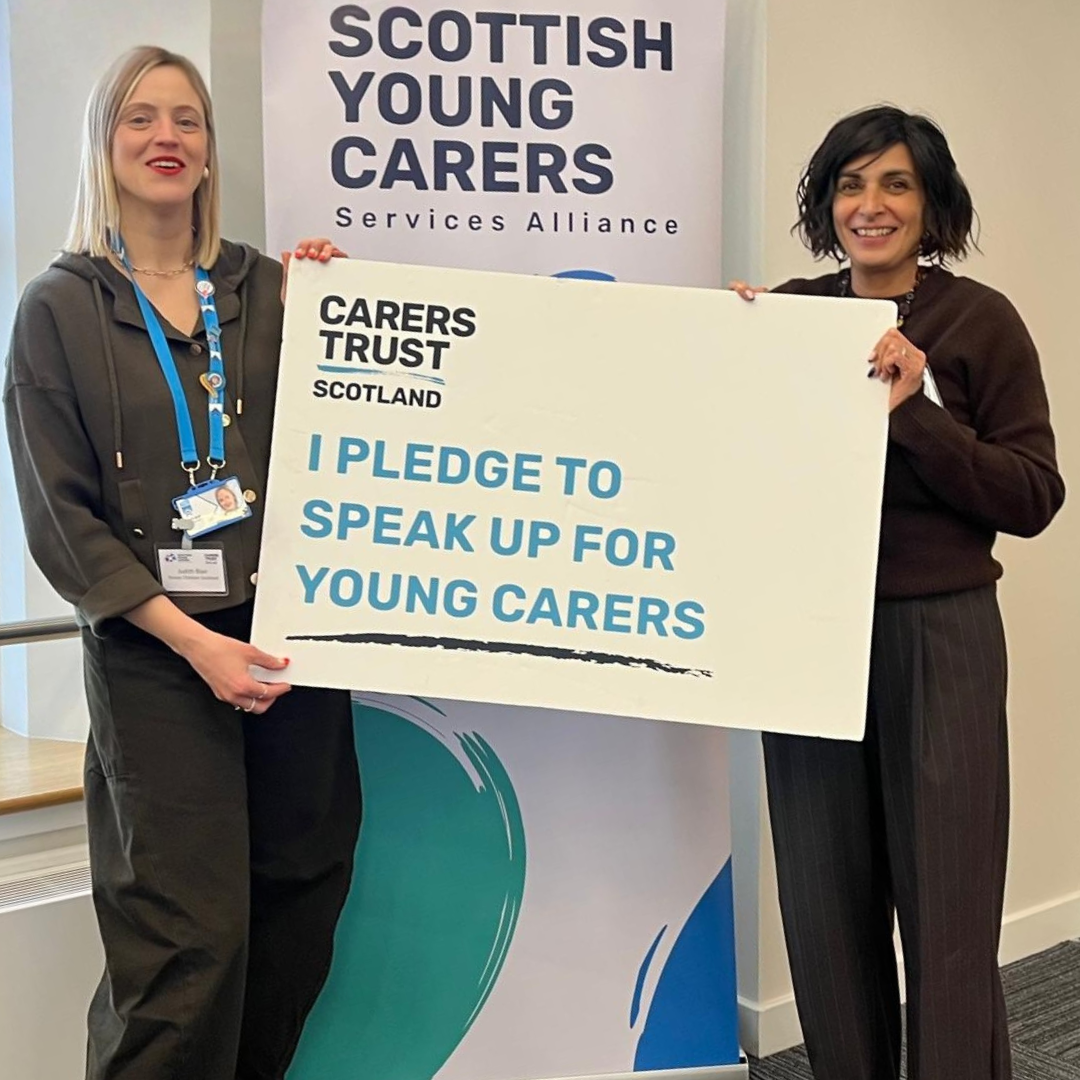

This week, the Career Transition Partnership (CTP) launched a pilot Family Transition Pack in Scotland. We’re so excited about this...
Happy National Cadets Week! This is the first-ever National Cadets Week, running 5-11 October. It’s a chance to celebrate cadets...
Midlothian Council has become the latest local authority to adopt the Forces Children’s Rights Charter. Cllr Pauline Winchester brought the...
Moving somewhere new is a big deal, and for children and young people from Armed Forces families, it can happen...
We’re so excited to share this report with you, highlighting the difference we have made for babies, children and young...
For many children and young people in Armed Forces families, global conflict and instability don’t feel like distant issues. These...
Today, Moray Council agreed to endorse the Forces Children’s Rights Charter and continue building on the success of the Dandelion...
Last week, we introduced a Rights-Informed Public Health Approach. Here are some ideas from our CEO, Steven Sweeney, on how...
In the words of Cadence, a young person who contributed to The Forces Children’s Rights Charter, “this is more than a...
Ask a child from an Armed Forces family about relocating and they are unlikely to talk only about moving house. They will describe...
This is a three-part series exploring how a Rights-Informed Public Health Approach (RIPHA) can support continuity of wellbeing for babies,...
Forces Children Scotland congratulates Andy Burnham on becoming Prime Minister. As he begins to set out his policy priorities, our...
Young people from across Forces families had a fun and productive summer residential last week in collaboration with Young Scot....
You may have seen the Ruby Boots poster by now, but do you know the story behind it? Here are some...
We are saddened by the recent loss of Malcolm Noble, our former Chair and dedicated Ambassador. As a team, we...
We're delighted to share that Forces Children Scotland has been named a Defence Employer Recognition Scheme (ERS) Silver Award winner....
Angus Council has today signalled its commitment to the Armed Forces community by becoming the first local authority in Tayside...
Scottish Borders Council has become one of the first local authorities in Scotland to formally adopt the Forces Children’s Rights...
Today, we’re marking our fifth anniversary as Forces Children Scotland, and we had a fitting celebration over the weekend:...
Renfrewshire Council has marked a milestone in strengthening the rights of children from Armed Forces families across Renfrewshire by endorsing...
Here is a summary of our response to the UK Government’s Growing Up in an Online World consultation, courtesy of...
Inverclyde Council has today become the first local authority in Scotland to endorse the Forces Children’s Rights Charter, marking a...
As proud members of Veterans Scotland, we were delighted to attend the Armed Forces Champions Gathering in Stirling last week...
This Volunteers’ Week, we’re feeling grateful to the wonderful team that makes Ruby Boots possible, including Louise, whose compassion and...
In April, we introduced you to Sergeant Scott Urban, who shared why he chose to run the Edinburgh Half Marathon:...
As Communications and Marketing Officer, I produce a lot of content for our website and other channels, but I couldn’t...
This Mental Health Awareness Week, the theme is Take Action. Meaningful action starts with understanding what we may be missing. Forces children often...
A new free, one-to-one online tutoring service for young people from serving Royal Navy, Royal Marines and Royal Fleet Auxiliary families...
Young people aged 11-17 are invited to take complete a 20-30 survey and take part in this research project about...
As Camouflaged in the education system makes clear, children and young people from Armed Forces families are too often present, but unseen: their unique experiences are overlooked in systems that aren’t yet designed with mobility,...
We’re happy to be one of 11 projects helping Forces families feel at home after a move, thanks to funding...
Robert Reid recently joined Forces Children Scotland as a Policy and Campaigns Officer and is working to champion the rights...
Continuing our series on real-life Forces children’s experiences, here are some reflections from young people involved in our participation work,...
Lesley Ure, Community and Service Lead at King’s Group Academies, recently organised a collaborative event in Helensburgh around Scotland’s Schools:...
In this blog, we will look back at a few memories which have stuck with Forces children to celebrate the...
Meg Thomas, our Deputy CEO and Policy Lead, shares some thoughts from a Parliamentary event celebrating Month of the Military...
This May, Sergeant Scott Urban is running the Half Marathon in Edinburgh and raising money to support our work. Here...
Forces Children Scotland warmly welcomes Former Air Commodore Polly Miller-Perkins CBE to her new role as Armed Forces Commissioner. As...
Last month, Judith (our Learning and Development Worker) and Nina (our Participation Manager) were out on the road delivering our...
As we approach Month of the Military Child, it’s critical we learn from the voices and views of children and...
Let’s work together so children and young people’s voices are heard, and their rights are respected, in Scottish schools. As...
One key recommendation from our jointly produced report on Forces children’s education is to embed children and young people’s participation...
We’re grateful to be among the organisations receiving funding from the Scottish Veterans Fund 2026-27, which was recently announced by...
Children from Armed Forces families grow up with experiences that most of their peers and teachers will not understand firsthand....
Even with the best intentions, participation can be challenging to put into practice. Hear from our participation team about practical...
Recently, we took a step back from our day-to-day work to think about the bigger picture – with help from...
Our participation team is excited to be co-producing a unique resource supporting the wellbeing of younger children while their parent or loved one is deployed. With support from the Armed Forces...
How can we meet the needs of the Royal Navy and Royal Marines community? First and foremost, by better understanding...
Louise, a Ruby Boots Volunteer Facilitator, attended a two-day training course to gain skills and knowledge about how to handle...
Marking Place2Be's Children's Mental Health Week 2026, here are some reflections from Deputy CEO and Policy Lead Meg Thomas about...
Children and young people have a right to be heard and taken seriously, but what does this mean, and what...
At the most recent SCiP Conference, we saw children and young people take the floor, commanding the attention of over...
Public speaking is no easy task, let alone to a conference with over 100 delegates. Seeing children and young people...
As 2025 comes to a close, we’re privileged to reflect on what the past year has meant for us and...
Here are some reflections from Annabella Alovatti, a Volunteer Facilitator for The Ruby Boots Project and an undergraduate student of...
Remembrance is both collective and deeply personal. It connects us to the sacrifices of previous generations while inspiring us to...
The theme of Befriending Week this year is Collaboration and Partnership. Heather Douglas, coordinator for the Ruby Boots Project, discusses...
This year marks the first in our partnership with Greenwich Hospital, and we’re proud to celebrate what we have accomplished...
We’re happy to share our principles for the meaningful participation of babies, children and young people. Here are some thoughts...
We are so pleased to share that the co-developed, forces-life-specific Talking Mat is now available to children and young people....
Scottish Children’s Health Week is a time to reflect on what it really means for every child to have the...
Here is some feedback from the Ruby Boots summer sessions, plus practical tips for making wellbeing boxes with children and...
We are delighted that Forces in Mind Trust has awarded funding to this research project exploring how children and young...
Earlier this month, we brought a group of 14 young people from forces families together in Edinburgh for an action-packed...
We can provide financial support to empower young people from Regular, Reservist and Veteran families to realise their potential.
We’re proud to share the impact of our recent learning sessions delivered to teachers at Colinton Primary School in Edinburgh!...
Wesley, a former British Army soldier, completed the 2025 Edinburgh Marathon and raised almost £800 for Forces Children Scotland.
Our team attended a families thank you day at RAF Lossiemouth.
Article 31 of the UNCRC says that every child has the right to relax, play and take part in a...
Funding from the Scottish Children’s Lottery has assisted Forces Children Scotland to provide vital financial assistance to armed forces and...
Interactive financial readiness tool now live Our short quiz is designed to help families leaving the armed forces consider important...
Mascot Design Competition Winner Announced We are delighted to announce that Isla Fraser, aged 13, from Elgin, has won our...
Making the change from military to civilian life A blog from Robyn Pattison, Policy Officer at Forces Children Scotland. Being...
Pupils combine forces with Forces Children Scotland to celebrate Month of the Military Child. Month of the Military Child raises...
Naval and Royal Marine Family Consultation We are working in partnership with the Royal Navy & Royal Marines Charity, the...
Month of the Military Child 2024 Celebration Pack Available Now Month of the Military Child is about recognising, understanding, and...
Attend Forces Children Scotland’s roadshow events in Edinburgh, Helensburgh, and Leuchars in April. Open to anyone in the community, we...
Forces Children Scotland’s Youth Forum members announced as award finalists. We are delighted to announce that young people from...
Forces Children Scotland receives bronze Employer Recognition Scheme Award. Forces Children Scotland was presented the award at a ceremony held...
Design a mascot for Forces Children Scotland We are looking for budding young artists from armed forces communities to design...
Military children encouraged to share personal stories for Month of the Military Child Campaign Children from armed forces communities have...
National Storytelling Week | Sharing the Stories of Forces Children. This fantastic annual event is a joyful celebration of the...
Forces Children Scotland supports Imogen’s international lacrosse success. Imogen received a grant from Forces Children Scotland to help self-fund a...
Download our latest Impact Report now! Our mission is simple. We want to become the sector-leading charity that supports children...
QVS Insights Podcast returns with three new episodes. You may remember our hugely successful podcast episodes with S5 pupils from...
Forces child, Natasha, stars in recent Tornado of Change Campaign. Natasha’s role portrayed a pupil starting at a new school,...
Young people learn how to make their own mini-documentary. Forces Children Scotland has delivered a three-day creative documentary-making residential for...
Podcasts series share lived experience of veterans who have made a successful change from military to civilian life. Forces Children...
Forces young people have worked with Kingdom FM to promote a new project launched in Fife by Forces Children Scotland....
Forces Children Scotland has worked with Queen Victoria School to co-produce a series of podcasts, funded by the Armed Forces...
Christmas can present unique challenges for young people from armed forces families. The holiday season is here, which is often...
Forces Children Scotland is working in partnership with Skills Development Scotland for Scottish Careers Week (07-11 November 2022), which is...
Forces Children Scotland is working in partnership with Skills Development Scotland for Scottish Careers Week (07-11 November 2022), which is...
Forces Children Scotland has today (18 October 2022) launched a new holistic support service to help families leaving the armed...
Forces Children Scotland will deliver an interactive workshop at the Children in Scotland Annual Conference in November, to present a...