“Our message is clear: hear us, involve us, and support us. This charter isn’t just about making life better for Forces kids today. It’s about ensuring that those who come after us have their rights respected too. Let’s turn these promises into actions that make a real difference.”
— Cadence, Rights Charter forum member
Babies, children and young people from Armed Forces families live extraordinary lives. Their experiences help them develop courage, adaptability and energy.
But strength is not the same as not needing support. All children thrive when the adults and systems around them listen, care and act on what they are told, and Forces children are no different.
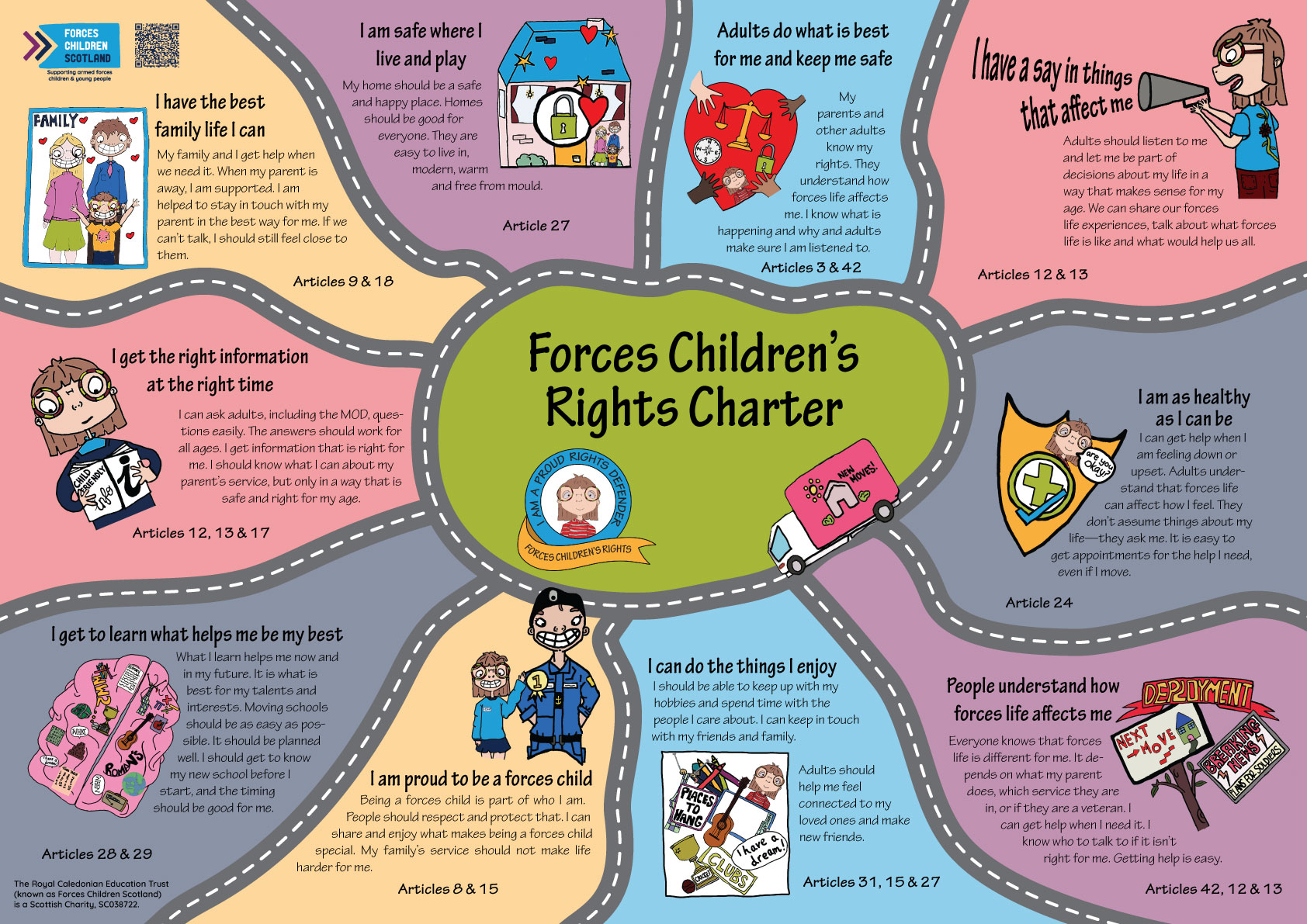
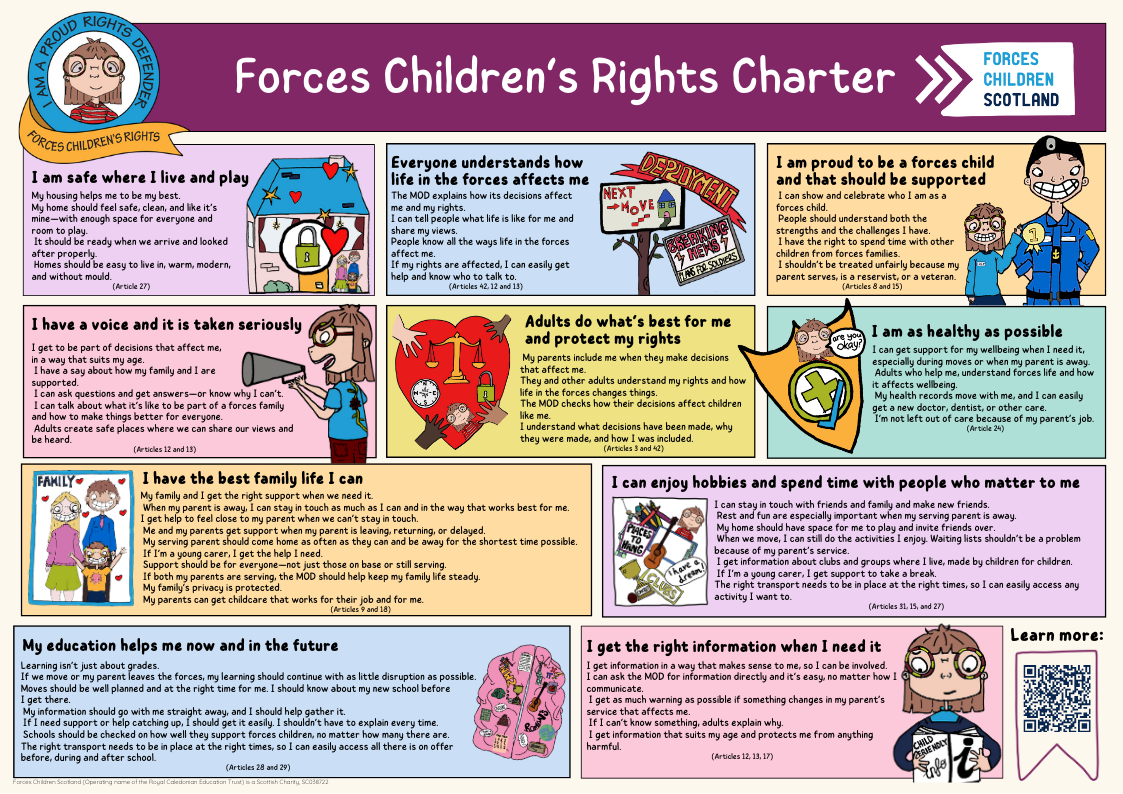
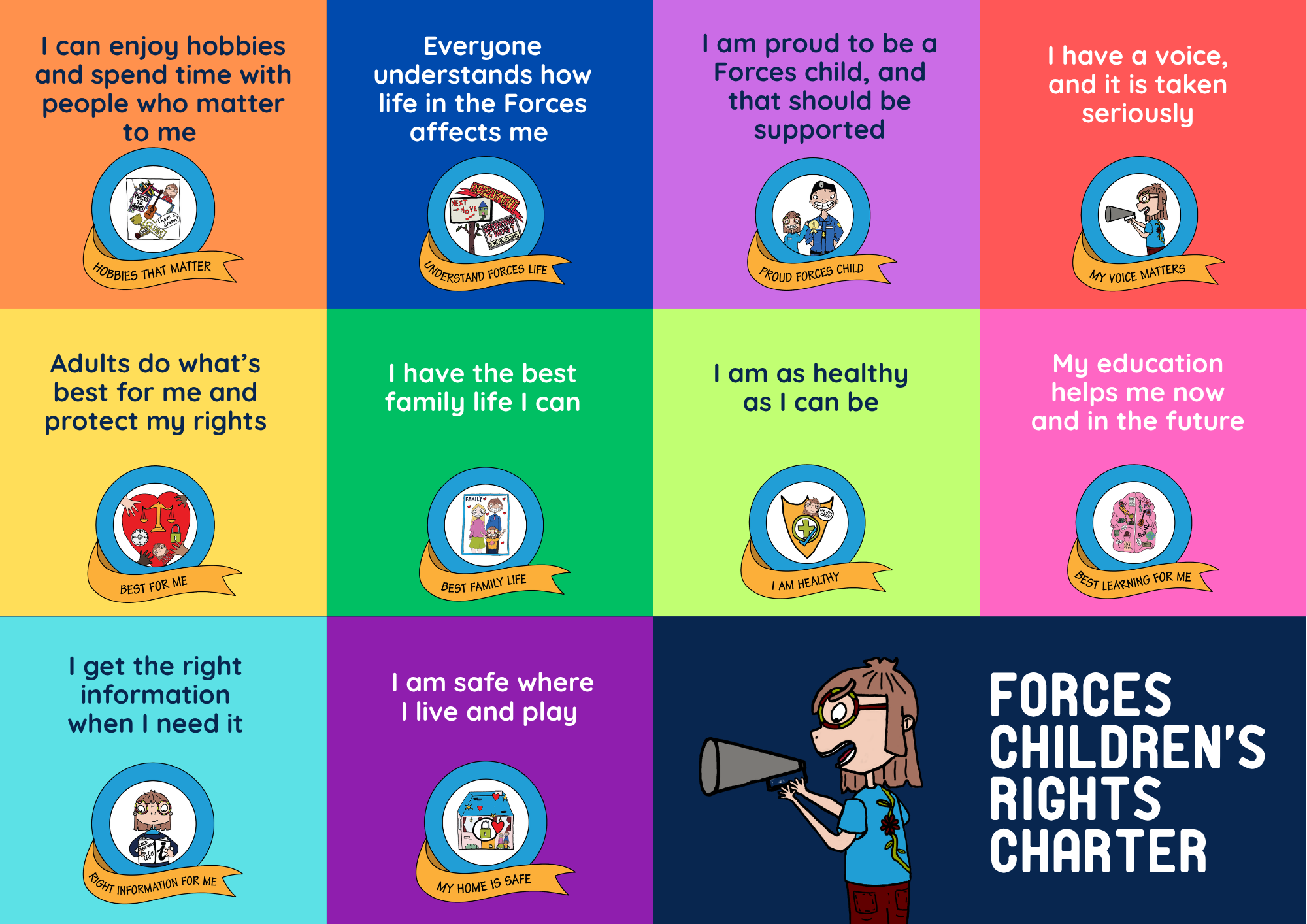
That’s why, led by children and young people from Forces families themselves, the Forces Children’s Rights Charter was created: outlining what needs to change so every Forces child is seen, heard and supported.


“The process of making the charter included a lot of children and young people’s thoughts and feelings. It allowed us to have our say on the importance of children’s rights, whilst also educating us in the process.”
— Erin, Rights Charter forum member
No matter where you work — in schools, health services, the military, policy, or the third sector — you have a role to play. Become a Rights Charter Defender and commit to upholding the rights of children from Armed Forces families.
Open to: Educators, Social workers, Healthcare professionals, Policymakers, Military personnel, Researchers, Anyone that cares
Take the pledge
“This is more than a document; it’s a representation of our ideas, stories, and vision for the future.” — Cadence
Here is a practical bank of resources to help introduce the Charter. Each resource gives children and young people opportunities to explore how being part of a Forces family can affect their rights and wellbeing, and to investigate the key points in the Charter.
Materials are adaptable by age and stage but are primarily aimed at primary and lower-secondary learners. Activities include a short lesson descriptor, clear instructions, question prompts and extension/differentiation ideas.
You’ll also find posters showcasing the Forces Children’s Rights Charter, for both primary and secondary school audiences.
If you would like to order a free poster for your setting, just let us know!
Get in touchThe UNCRC stands for the United Nations Convention on the Rights of the Child. This important, legally binding treaty protects children’s rights in almost 200 countries, including the UK.
The Convention is made up of 54 articles, reflecting children’s universal experiences and needs. In drafting our Charter, we considered how these articles are essential for ensuring the wellbeing of children and young people from Forces families.
Here’s a resource that can teach you about what’s included in the UNCRC.
Learn moreIn 2024, Scotland incorporated the UNCRC into Scots Law. This development inspired us to start speaking more about children’s rights and co-produce a report on what’s needed to protect the rights of children and young people from Armed Forces families.
Read the report
The most important part of this work, both the Rights Report and the Forces Children’s Rights Charter, is how it reflects the voices and experiences of the children and young people.